


Winter in Virginia is full of hidden stories. After a cold night, fresh mud or snow becomes a canvas—fox trails zigzagging through brush, delicate bird prints under feeders, and tiny squirrel feet racing between trees. A family walk becomes a mystery to solve. Here’s a simple, joyful guide to the animal tracks kids can spot across Virginia all winter long.
Winter is one of the best seasons for spotting wildlife signs. With leaves gone, ground cover flattened, and soil soft from rain, tracks become easier for kids to notice and follow. You don’t need special gear or deep woods—these clues appear along neighborhood sidewalks, park paths, creek edges, and backyard gardens.
Tracking gives children a chance to practice observation, problem-solving, and imaginative thinking. It’s a perfect screen-light winter activity that helps kids connect more deeply with nature — and builds the same confidence and curiosity they’ll carry into summer camp.
Research from the Children & Nature Network shows that nature investigation builds focus, emotional regulation, problem-solving skills, and resilience.
https://www.childrenandnature.org/learn/research/
Winter magnifies these benefits because:
• tracks are more visible in mud and snow
• animals move differently in winter, leaving interesting clues
• kids naturally slow down and observe more when surroundings are quiet
• colder weather encourages short, frequent nature breaks
The American Academy of Pediatrics also notes that outdoor play in all seasons supports mood, movement, and creativity.
https://www.aap.org/
Tracking is a gentle way to turn any outing into an adventure.
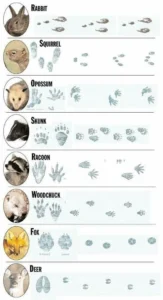
These are among the easiest tracks for kids to identify. All are common statewide—from Northern Virginia and Richmond to the Blue Ridge, Tidewater, and Southwest Virginia.
Two teardrop-shaped prints that form a heart-like shape.
Where to find them: edges of fields, forests, and muddy trails.
Small, oval prints with four toes and a faint heel pad. Fox tracks tend to form a straight, purposeful line.
Kids love learning that foxes “walk in their own footsteps” to save energy.
Tiny “hands” with five long fingers. Look for them near creeks, drainage areas, and muddy pathways.
Children often squeal with delight at how human they look.
Front paws: small and close together.
Back paws: larger and offset, forming a “Y” or leap pattern.
Fun to spot around trees, parks, and backyards.
Two large back feet side-by-side, with two smaller front paws ahead. Looks like a tiny exclamation point.
Perfect for winter scavenger hunts.
Three forward-facing toes, one back toe.
Kids can compare different shapes: songbirds, crows, turkeys, ducks.
Kids can practice noticing differences between:
• dog vs. fox
• house cat vs. bobcat
• domestic poultry vs. wild turkey
This is a fun “detective challenge” during family walks.
The best way to spot tracks is by walking slowly and crouching to kids’ eye level.
Tracks often appear where mud stays damp: along creek banks, under trees, near garden beds.
Light at an angle helps footprints pop.
Kids love comparing shape, size, and patterns later.
Encourage kids to wonder:
“Where do you think the fox was going?”
“What made the deer stop here?”
These questions build creativity and inference skills.
Try these prompts on your next winter walk:
Children love becoming nature detectives.
Tracking is safe and accessible for toddlers through teens.
Tracking builds curiosity, confidence, and independence—skills that help children thrive at camp. When kids practice noticing nature’s clues, they become more comfortable outdoors, more observant, and more willing to explore.
Explore camps that encourage creativity and outdoor discovery:
Adventure Camps
Overnight Camps
Nature & Outdoor Experiences
Animal tracks help kids see winter not as a dull season, but as a secret world full of stories. Every track is a clue. Every pattern is a puzzle. And every walk becomes an adventure they want to repeat.
Tracking nurtures curiosity, strengthens family connection, and builds nature confidence—one small footprint at a time.


At VirginiaSummerCamp.com, our editorial team creates practical, parent-focused resources about camps and youth programs across Virginia. While we occasionally use AI tools to support research and drafting, every piece is checked by a human editor before publication. Our goal is to provide helpful, trustworthy guidance—rooted in real-world experience as parents and educators—while continually improving our processes to reduce errors and offer the most reliable information possible. All articles are reviewed and refined by experienced editors who understand the needs of Virginia families and are committed to accuracy, clarity, and transparency.
We care deeply about raising curious, confident, active kids, and we approach every guide with that purpose in mind.
Sign up below to join our mailing list!
Your trusted guide to day and overnight camps
VirginiaSummerCamp.com connects families with summer camps and youth programs across Virginia and the Mid-Atlantic. We’re more than a camp directory—our mission is to help parents raise curious, confident, active kids through expert guidance, research-backed insights, and year-round inspiration.
© 2025 VirginiaSummerCamp.com | Zinnia Communications LLC | All Rights Reserved.