
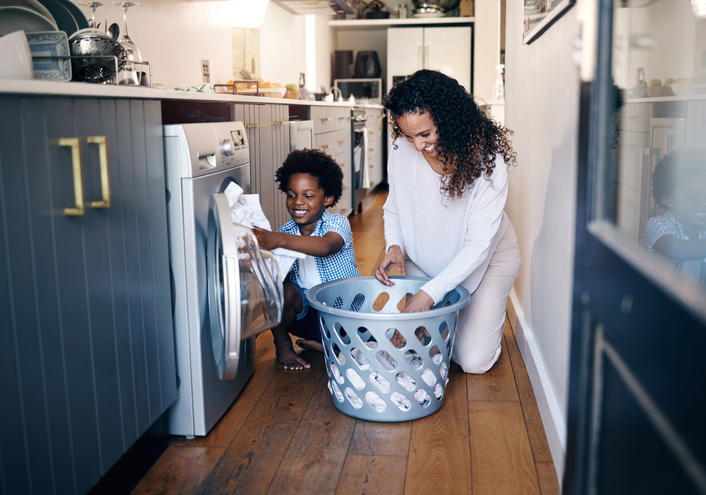
If you’ve wondered whether your child should be doing chores, the latest research offers a clear answer: yes. Studies show that everyday responsibilities build independence, confidence, and self-regulation—skills that don’t just help at home, but also prepare children to thrive in group settings like school and summer camp.
Parents are often torn about chores. Life is busy, kids are over scheduled, and sometimes it feels easier to do everything ourselves. But a strong body of research continues to show that chores are far more than household tasks—they’re one of the simplest and most powerful ways to help children grow into confident, capable, independent people.
Below is a warm, parent-friendly summary of what the research says, how to introduce chores without power struggles, and how these daily habits strengthen the same skills kids rely on at summer camp.
The American Academy of Child & Adolescent Psychiatry notes that even young children benefit when given consistent, age-appropriate chores. These tasks can improve self-esteem, reduce anxiety, support emotional regulation, and build the foundations of responsibility.
A longitudinal study published in the Journal of Developmental Psychology found that chores in early childhood predicted stronger executive functioning and better life satisfaction in adolescence.
Michigan State University Extension emphasizes that chores help children understand routines, deadlines, teamwork, and contribution—all essential for self-regulation and resilience.
Together, these findings show that chores are developmental building blocks—not busywork.
Independence isn’t sudden. Children build it through hundreds of tiny experiences where they try, practice, and master small responsibilities.
Research links chores to:
• improved frustration tolerance
• stronger executive functioning
• better emotional regulation
• increased self-confidence
• more resilience during transitions
• problem-solving and teamwork skills
These aren’t skills children magically “grow into”—they’re learned through practice in supportive environments.
When children help the family in real, age-appropriate ways, they learn that they are capable, needed, and trusted—three ingredients essential for confidence at camp and beyond.
This expanded list is based on developmental research and occupational-therapy guidance on building executive function and independence.
These are guidelines, not rigid rules. Every child and family will adapt them differently.
Focus: imitation, participation, simple routines
• Put toys into a basket
• Wipe small spills with help
• Carry items to a counter
• Help feed a pet (with parent guiding hands)
• Place shoes by the door
Focus: routine-building, basic independence
• Set napkins and utensils
• Water plants
• Help sort clean laundry
• Carry plates to sink
• Help match socks
• Clean up play areas with guidance
Focus: follow-through, responsibility, basic planning
• Make their bed
• Put away clothes
• Clear and wipe their spot at the table
• Load lightweight dishes into dishwasher
• Sweep small areas
• Keep backpack and school items organized
Focus: multi-step tasks, self-management, community contribution
• Pack their own lunch (with guidance)
• Take out trash or recycling
• Vacuum bedrooms or hallways
• Fold and put away laundry
• Clean shared spaces (e.g., bathroom counters)
• Help prepare simple meals
Focus: independence, leadership, community responsibility
• Do their own laundry independently
• Prepare full meals
• Manage sports gear or camp packing lists
• Deep-clean bathroom or kitchen (age-appropriate chemicals)
• Mow lawn or outdoor chores if safe and supervised
• Babysit younger siblings for brief periods
This is where independence takes root—and where kids begin taking pride in their competence.
Camps frequently observe that kids who practice small responsibilities at home adapt more smoothly to cabin life, group routines, and shared spaces.
Chores reinforce skills camps rely on:
• following directions and daily schedules
• managing belongings
• teamwork and cooperation
• emotional self-regulation
• navigating group living
• solving small problems independently
• respecting community norms
Explore camps where independence and teamwork truly shine:
Day Camps
Overnight Camps
Adventure Camps
STEM Camps
All Camps
Choose quick wins so kids see immediate success.
Show how, support early attempts, then allow independence.
“I noticed you worked really hard on this” builds resilience.
Tasks should feel achievable—not overwhelming.
“Do you want to clear the table or water plants today?”
Saying “Thank you for helping our family” reinforces intrinsic motivation.
Resistance is common. Keep tasks small, consistent, and tied to routines. Encourage rather than threaten.
Research suggests children internalize responsibility best when chores are framed as contribution, not payment. Allowance can exist separately.
They will. That’s part of learning. Over time, efficiency grows naturally.
Chores are one of the most research-supported ways to build confidence, responsibility, and a sense of capability. They strengthen the exact skills—self-regulation, community awareness, teamwork—that help children thrive in school, friendships, and at summer camp.
When families approach chores with warmth and encouragement, kids don’t just learn to contribute—they learn they are capable of handling the world around them.
Republished and adapted with permission from Parenting Translator.
Original article: “Should Your Child Be Doing Chores?”


DR. CARA GOODWIN PhD is a licensed clinical psychologist, researcher, and mother of four who writes for CharlottesvilleFamily Magazine and VirginiaSummerCamp.com. She is the founder of Parenting Translator, a trusted resource dedicated to helping parents make confident, informed decisions by translating complex child development and parenting research into clear, practical guidance.
Dr. Goodwin lives in Central Virginia with her children, and her work is deeply grounded in both scientific expertise and real-world parenting experience. Through her writing, she supports families in raising emotionally healthy, resilient kids—offering evidence-based insight that feels accessible, reassuring, and relevant to everyday family life.
Sign up below to join our mailing list!
Your trusted guide to day and overnight camps
VirginiaSummerCamp.com connects families with summer camps and youth programs across Virginia and the Mid-Atlantic. We’re more than a camp directory—our mission is to help parents raise curious, confident, active kids through expert guidance, research-backed insights, and year-round inspiration.
© 2025 VirginiaSummerCamp.com | Zinnia Communications LLC | All Rights Reserved.