
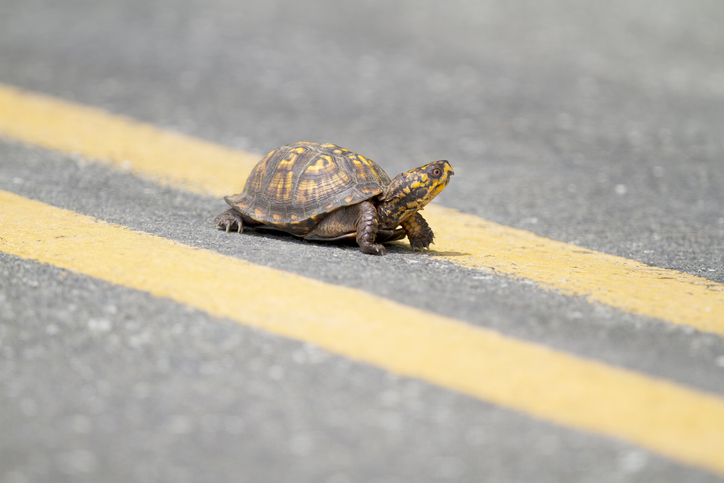
One of the best things about raising kids in Virginia is the wildlife right outside your door. And if you’ve spent any summer driving on Virginia’s wooded backroads—or even through the suburbs—you’ve almost certainly come across a turtle crossing the road with your kids in the backseat yelling “STOP! TURTLE!”
That moment is a perfect opportunity to teach your children about wildlife, conservation, and being good stewards of Virginia’s natural world. Here’s everything your family needs to know about helping Virginia’s turtles this summer—and turning it into an unforgettable outdoor learning experience.
You’ll hear lots of conflicting advice depending on who you ask, but the answer is simpler than you think: gently place the turtle on the side of the road in the direction it was heading. That’s it.
Even with good intentions, never relocate a turtle to a spot you think is “better.” Turtles have incredibly strong homing instincts and will travel miles searching for their original territory. Moving one to a pond across town actually puts it in more danger as it crosses more roads trying to get back home.
This is a great teaching moment for kids: sometimes the best way to help an animal is to respect where it was already going.
Most Virginia turtles can be handled safely with both hands, firmly holding them by the shell on either side. Make sure little hands have a good grip and are careful not to drop them.
One important exception: the snapping turtle. Snapping turtles have a surprisingly wide range of motion in their necks and a powerful bite (they earned that name!). If your family comes across a snapping turtle that needs help crossing, try using a car floor mat to gently drag it in the direction it was headed. Always prioritize your family’s safety first.
This is a wonderful chance to teach children to respect animals and to understand that different species require different approaches—a real-world science lesson happening right on the roadside.
Virginia’s diverse ecosystems host a variety of turtle species, and learning to identify them makes every nature walk, hike, or car ride more exciting. Here are some species your family might encounter:
Look for the distinctive red spots on either side of the head. You’ll find these near ponds, lakes, and streams throughout Virginia. They’re one of the most common turtles your kids will spot during summer adventures.
These beautiful turtles are a real treasure to find in Virginia’s wooded areas. Box turtles get their name from their unique ability to completely seal their head and limbs inside their shell—not unlike closing a box. Kids are fascinated by this! Box turtles face serious threats, including habitat loss and poaching, so it’s important to admire them and let them continue on their way. Never try to keep one as a pet.
Impressive and intimidating, snapping turtles are powerful animals that deserve respect and distance. Help kids understand that we can appreciate wildlife without touching every animal we find.
Can they identify a turtle’s species by observing its shell color, shape, and size? Bring a simple field guide on your next hike or download a wildlife identification app to make it interactive.
Kids always want to know WHY, and this answer is fascinating: during summer months, many Virginia turtles are searching for safe places to lay their eggs. All of Virginia’s turtle species lay their eggs underground, and once the babies hatch, they dig themselves out and begin their journey completely on their own—finding food and shelter without any help from mom.
This is incredible dinner table conversation material. Ask your kids: “How would you survive if you had to find your own food and shelter the day you were born?”
If you’re lucky enough to have a turtle choose your property for her nest, congratulations—you’ve got a front-row seat to one of nature’s most amazing processes, and an incredible learning opportunity for your children.
Disturb the area as little as possible while the mother is digging and laying eggs. If she gets scared, she may abandon the nest before finishing.
Turtle eggs have many natural predators in Virginia including raccoons, coyotes, foxes, and even your own dogs and cats. If you’re worried about the nest being disturbed, you can build a simple protective cage using chicken wire and zip ties from any hardware store. This is a fantastic hands-on project for kids who love building things.
Important: Check the nest regularly so you can remove the cage once the babies hatch. Those tiny turtles need to be free to begin their journey into the wild.
Have your kids track how many days the eggs take to hatch (keep a journal!). Make observations about the mother turtle’s behavior during nesting. Draw or photograph the nest at different stages. Research the species and predict when hatching might occur. Record weather conditions and see if temperature affects hatching time.
This kind of hands-on, backyard science is exactly what summer learning should look like—no worksheets required.
This is one of the rare cases where it’s acceptable to temporarily remove a turtle from the wild so it can receive medical treatment.
Place the injured turtle in a dark box with air holes to reduce stress, then contact a wildlife rehabilitator. The Wildlife Center of Virginia accepts and provides medical care for hundreds of turtles each year, with the goal of releasing them back into the wild.
If the Wildlife Center is too far away, call them anyway—they can redirect you to a rehabber closer to your location.
Important for well-meaning kids: Don’t try to provide medical treatment yourself. Turtles are complex animals, and even good-intentioned assistance can make healing more difficult. This is another valuable lesson: sometimes helping means knowing when to call an expert.
Virginia is growing, and development continues to expand, but our turtles are doing their best to adapt. The best thing we can do is leave healthy wildlife in the wild so that future generations can enjoy them just as we have.
Every time your family stops to help a turtle cross the road, identifies a species on a hike, or protects a nest in the backyard, you’re teaching your children something bigger than turtle facts. You’re raising kids who notice the natural world, who care about other living things, and who understand that even small actions matter.
One of the best things about raising a family in Virginia is the wealth of natural beauty surrounding us—the mountains, the rivers, the forests, and yes, the turtles. Let’s all do our part to preserve it for the next generation of curious, confident, active kids.
Looking for more ways to explore Virginia’s natural world with your kids this summer?
Browse outdoor and nature camps across Virginia, download free packing lists and camp prep guides, and explore the outdoors with adventures like Virginia State Parks, Virginia’s Rails to Trails adventures, and mountain biking around the state.

Sign up below to join our mailing list!
Your trusted guide to day and overnight camps
VirginiaSummerCamp.com connects families with summer camps and youth programs across Virginia and the Mid-Atlantic. We’re more than a camp directory—our mission is to help parents raise curious, confident, active kids through expert guidance, research-backed insights, and year-round inspiration.
© 2026 VirginiaSummerCamp.com | © 2026 Zinnia Communications LLC | All Rights Reserved.