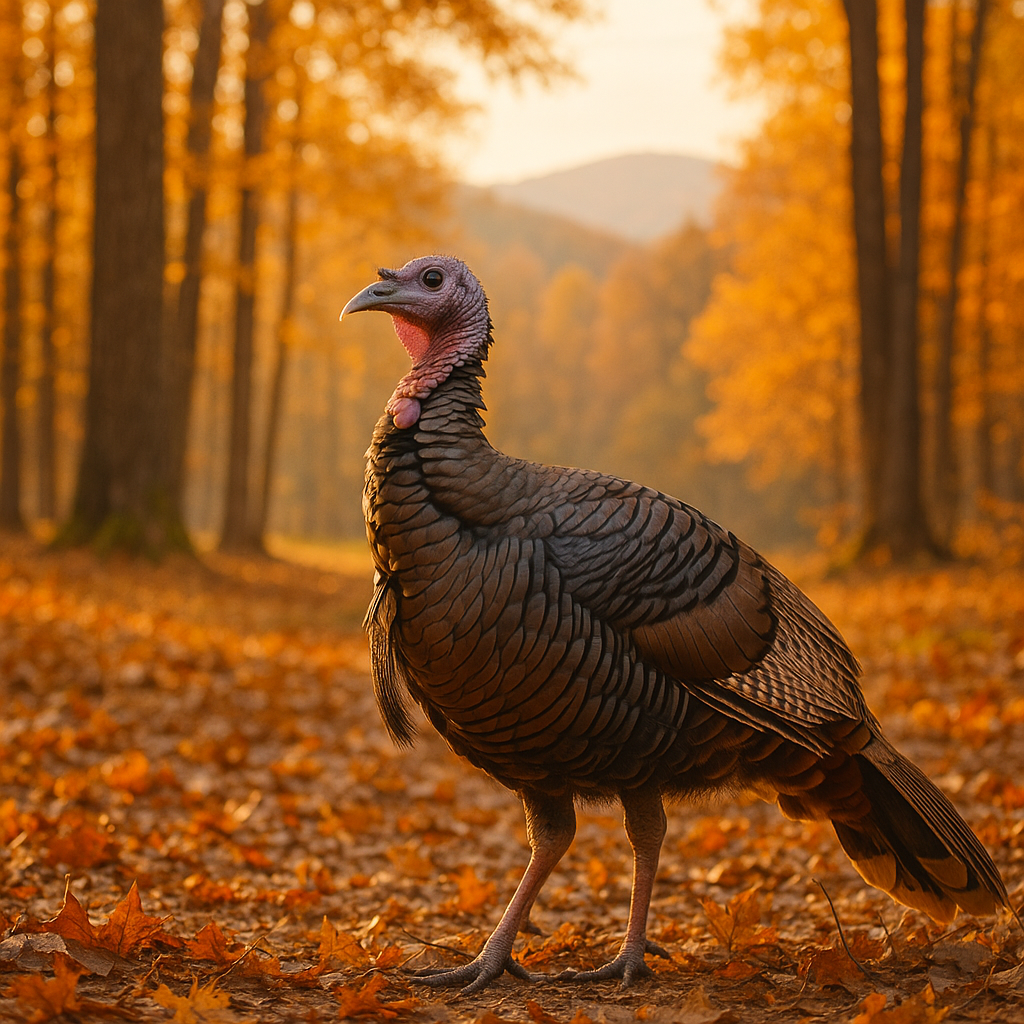
Thanksgiving week is the perfect time for families to step outside and discover one of Virginia’s most iconic animals—the wild turkey. They roam our forests, meadows, and rural edges across the Commonwealth, and spotting one on a crisp fall day can turn an ordinary family walk into a moment of wonder. This is a chance to give kids a real “wow” moment before the holiday meal, while helping them build a deeper appreciation for local wildlife.
Families who love exploring the outdoors will also enjoy our seasonal nature guides, from Birdwatching in Virginia: A Beginner’s Guide for Families to Rails-to-Trails Paths Perfect for Kids.
Once nearly gone from the state, wild turkeys have rebounded thanks to decades of conservation work by the Virginia Department of Wildlife Resources (DWR). Today, they thrive throughout the Blue Ridge, Piedmont, Tidewater, and even parts of Northern Virginia’s more suburban areas. Their comeback is considered one of the greatest wildlife restoration stories in the Commonwealth.
If your family enjoys wildlife spotting, you can read DWR’s full turkey conservation history.
Many kids imagine turkeys as slow, grounded birds. But wild turkeys can burst into flight at speeds up to 55 miles per hour, especially when escaping predators.
Turkeys roost high in sturdy branches to stay safe at night. If you’re hiking at dusk, look up—you might spot a silhouette.
Turkeys see in color and have nearly 360-degree vision, making them hard for predators to surprise.
Yes, gobbling is real—but they also cluck, yelp, and purr. Moms and chicks keep in touch with soft, sweet chirps.
They hatch ready to leave the nest, run, and search for food within 24 hours. They grow almost unbelievably fast, which kids love learning.
In sunlight, turkey feathers shine green, bronze, and copper—a lovely sight on a fall hike.
Turkeys prefer open woods, forest edges, and areas with acorns, seeds, and insects. Families have good luck spotting them in:
Wild turkeys often graze near Skyline Drive meadows. Sunrise and sunset are ideal.
Small groups (called rafters) wander open fields all through Albemarle, Greene, and Nelson counties.
Quiet, flat pathways—like the High Bridge Trail—create perfect viewing opportunities. Find a Rail-to-Trail adventure near you.
Diverse habitats near York River State Park and First Landing State Park support turkey populations.
Turkeys are opportunistic foragers, which makes them fun to observe. They eat:
Acorns and nuts
Seeds and berries
Grass and leaves
Insects and small critters
In many Virginia forests, acorn-heavy years (“mast years”) lead to a noticeable increase in turkey sightings. This is a great talking point on your Thanksgiving hike.
A fun family activity is learning to identify turkey footprints in soft dirt or snow. Turkey tracks look like:
A large, three-toed print
Nearly the size of an adult hand
Deep and clearly outlined
Bring paper and a pencil so kids can sketch the tracks or take photos for a nature journal.
Share a quick wilderness lesson with children:
Keep voices soft
Stay on the path
Watch from a distance
Move slowly
Never feed wildlife
These small habits help children develop respect for the natural world.
Look along forest edges, meadows, farm fields, and state parks such as Shenandoah, Sky Meadows, and York River.
Yes. Thanks to successful conservation, wild turkey populations are thriving statewide.
Acorns, berries, seeds, and insects—making them especially easy to spot during autumn foraging.
If you’re quiet and slow, they may simply walk away or continue searching for food.
Turkey season is just the beginning. Our Virginia Wildlife for Families blog series helps you spot winter birds, learn about foxes and deer, and find cold-season hikes perfect for kids.
Whether you encounter a rafter of turkeys crossing a country road or spot a lone bird scratching for acorns along a trail, sharing this wildlife story with children builds curiosity and gratitude. It’s a small, meaningful way to connect kids with nature—and with the Commonwealth they call home.


Suzannah Russ Spaar is an experienced educator, poet, and mother based in the foothills of the Virginia Blue Ridge, with deep roots in the camp and literary communities. She brings a thoughtful editorial lens to her work, interviewing camps for VirginiaSummerCamp.com and shaping trusted, parent-focused content across our platforms.
Suzannah earned her MFA from the University of Pittsburgh and is the co-author of the chapbook Undone in Scarlet (Tammy, 2018), written with Lucia LoTempio. Her background in poetry and education informs a clear, engaging storytelling style that resonates with both parents and partners.
In addition to her editorial work for VirginiaSummerCamp.com, Suzannah serves as editor of TheBiblioParent.com and CharlottesvilleFamily’s Bloom Magazine, where she helps ensure content is both meaningful and accessible—grounded in expertise, curiosity, and a genuine understanding of family life.
Sign up below to join our mailing list!
Your trusted guide to day and overnight camps
VirginiaSummerCamp.com connects families with summer camps and youth programs across Virginia and the Mid-Atlantic. We’re more than a camp directory—our mission is to help parents raise curious, confident, active kids through expert guidance, research-backed insights, and year-round inspiration.
© 2025 VirginiaSummerCamp.com | Zinnia Communications LLC | All Rights Reserved.