


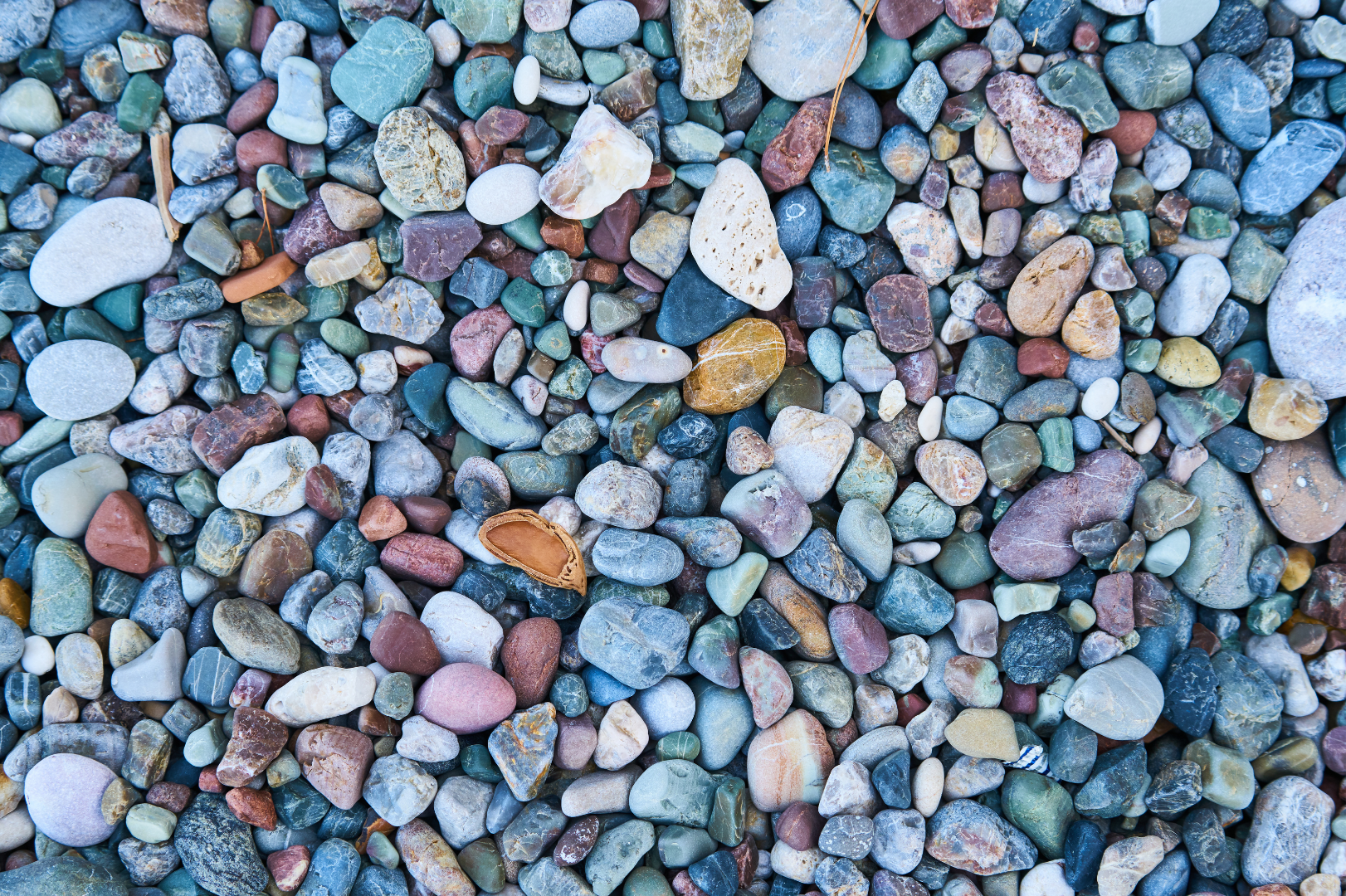
If there’s one thing that kids love to do it’s collect! Whether it’s toys, sticks, feathers, rocks, or dead beetles (maybe that last one was just me!). Sometimes these collections make sense to us as parents, and sometimes they don’t – but that’s the beauty of collecting!
One of my most prized possessions even as an adult is my rock collection. It includes fossilized shark teeth and prehistoric scallops from the Chesapeake Bay, quartz from some of my favorite hikes in the Blue Ridge Mountains, cross-shaped fairy stones from Virginia’s Fairy Stone State Park, and even more! Each rock represents a memory of mine, and the natural history of the region that led to its formation. Rock collecting, or “rockhounding” if you’re speaking to an enthusiast, is a great and accessible hobby for all ages! Here are some common rocks your little one can find across Virginia’s 5 unique regions to start their very own collection.
Scientists who study rocks are called geologists. Geologists group rocks based on how they are created. Here is a brief explanation of the three ways that rocks can be created to share with your little one!
Igneous Rocks: Form from volcanoes when hot magma or lava cools – compare to how melted crayon wax hardens into new solid crayons!
Metamorphic Rocks: Old rocks change into new rocks from heat and pressure deep beneath the Earth’s surface – compare to how a caterpillar goes through metamorphosis to change into a butterfly!
Sedimentary Rocks: Old pieces of rocks get recycled into new rocks as the pieces get pressed together over millions of years – compare to pressing the layers of a sandwich together!
Visit any state park visitor center here in Virginia and you’re sure to find a park ranger willing to answer your little ones’ rock questions! For an easy to access visual guide to some of Virginia’s most common rocks and minerals check out the Virginia Department of Energy’s Geology Page.
Fossils are created when an organism such as a plant, insect, or animal passes away and their body is quickly covered with sediment. The sediment protects the body from decomposing and scavengers. Over millions of years the minerals from water and sediment seeps into the remains turning them to stone. Marine organisms such as snails, clams, and scallops are common fossils to find in the state of Virginia!
Great news – you don’t need any!
One of the best things about rock collecting is that it requires nothing but curiosity! But of course some tools may add to your little ones’ experience.
Virginia’s Coastal Plain is home to the official state fossil – Chesapecten jeffersonius. Named after Thomas Jefferson due to his personal interest in natural history, it is an ancient species of scallop that lived in the region between 3 and 8 million years ago. This fossil can be found just outside of Williamsburg at the York River State Park, and Westmoreland State Park located along the Potomac River. To find this particular fossil examine the edges of cliffs and streambeds for shell shaped fossils. Even if you can’t find this fossil on your trip you are sure to come across some unique pebbles or even other common marine fossils!
Virginia’s Piedmont is a literal gem mine for rockhounds! Stuart’s Fairy Stone State Park offers an opportunity to search for rare cross-shaped fairy stones! Fairy stones are a naturally occurring staurolite crystal composed of iron, aluminum, and silicate.
Streambeds across Virginia’s piedmont are rich in small garnets, quartz, or even trace amounts of gold! Bring buckets, bowls, and strainers to separate and examine your finds. Quartz is easily identified by its glassy luster and can come in a variety of naturally occurring shades from white to gray to even pink! Remember to always monitor weather conditions when bringing little ones to a stream as heavy rain can cause flash flooding.
Virginia’s Blue Ridge Mountains are rich in metamorphic rocks such as schist, gneiss, slates, and quartzites. Metamorphic rocks are formed from previously existing rocks that are transformed by a combination of heat and pressure deep within the earth’s surface. These rocks may show banding or spotting from the combination of rocks they were created from!
Take a stroll anywhere in this region and just take a look at the ground! Even rocks that may not look exciting from a distance may surprise you up close. Encourage your little ones to use a magnifying glass to examine the details of their discoveries. If you’re visiting a national park remember that it is illegal to remove any natural materials – so stick to collecting pictures and memories!
Virginia’s Valley and Ridge region is defined by sedimentary rocks. Sedimentary rocks are formed by fragments of other rocks over time compacting into a new rock. Sedimentary rocks are often lined and have defined layers. This region also contains coal deposits.
George Washington & Jefferson National Forest is home to Devil’s Marbleyard. It is a 2.8 mile hike that may be challenging for very little ones, but if your family is up to the challenge it leads to an 8 acre field of quartzite! Collection for personal use is permitted in National Forests so your little one can even bring a piece home with them.
Virginia’s Appalachia is known for its wealth of coal deposits, but it’s also full of sandstone and shale. A tip for finding coal deposits and even fossils of ancient plants is by examining roadcuts. A roadcut is a human-made slope into a hill or mountain created to accommodate the passing of a road. They provide a shortcut to rocks and fossils that would otherwise require heavy digging to access. Exploring roadcuts can have risks so a couple things to keep in mind… Do not dig into the slope as it can cause falling rocks. Stick to collecting already fallen material or exposed rocks. Do not allow little ones to try to climb the slope as it can cause debris to fall. And of course, make sure it is a safe distance from the road and passing cars. Keep an eye on your little ones at all times.
While we’ve highlighted some parks across the region great for rockhounding, your family doesn’t have to go any further than the front yard to start rock collecting! Virginia’s soils are full of quartz, granite, and more. One of my favorite finds was actually a fossilized snail shell found in a pile of landscaping pebbles purchased from Home Depot! Take a look around the ground close to your home and you may be surprised by what you find.
Encourage your little ones to look for different shapes, sizes, and textures of rocks. These are qualitative properties that scientists use to evaluate specimens every day! Engage their mind in even higher level thinking by having them sort their collection by these features. A clean egg carton makes for an easy DIY organizer.
Older kids can document their findings in an observation journal. Things to include in their entry could be location and date found, and how the rock looks and feels.
Utilize these easy-to-use printables and guides to make the most of your family’s outdoor adventures this summer!
Browse and Download Free Nature Printables for Kids & Families
Learn About Virginia animal tracks from our parent-and-kid winter tracking guide.
Looking for more ways to explore Virginia’s natural world with your kids this summer?
Browse outdoor and nature camps across Virginia.
Download free packing lists and camp prep guides.

Sign up below to join our mailing list!
Your trusted guide to day and overnight camps
VirginiaSummerCamp.com connects families with summer camps and youth programs across Virginia and the Mid-Atlantic. We’re more than a camp directory—our mission is to help parents raise curious, confident, active kids through expert guidance, research-backed insights, and year-round inspiration.
© 2026 VirginiaSummerCamp.com | © 2026 Zinnia Communications LLC | All Rights Reserved.