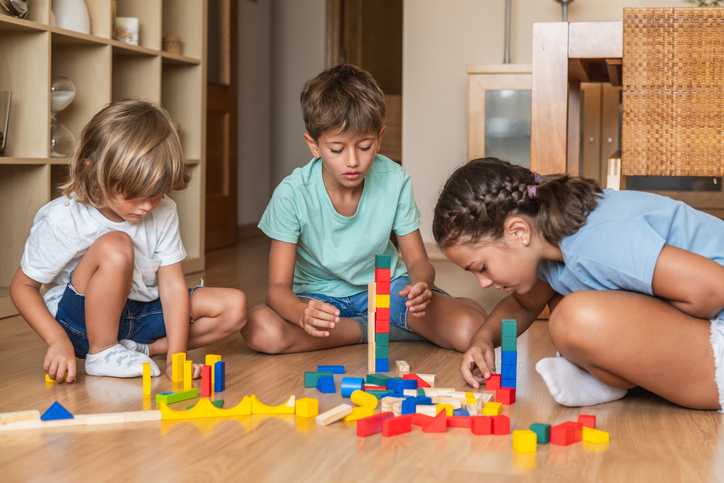
Unstructured play isn’t “wasted time.” Research shows that when children explore freely—without screens, schedules, or adult direction—their creativity, independence, and resilience grow in powerful ways. Here’s how these simple, unhurried moments help kids thrive at home and at summer camp from Virginia mom, child psychologist and author, Dr. Cara Goodwin..
In a world of busy schedules, digital entertainment, and constant stimulation, children have fewer opportunities to simply play—to imagine, explore, or follow where curiosity leads. Parenting Translator’s article “What Helps Kids Develop Creativity?” highlights a truth many families feel in their gut: kids flourish when they have unstructured time.
This article reframes that research through a camp-centered lens, showing why unstructured play is one of the greatest gifts we can offer our children—and why it prepares them beautifully for the independence and joy of summer camp.
Parenting Translator’s research summary highlights several findings from developmental psychology:
Unstructured play fuels creativity.
Open-ended time gives children the mental space to imagine, invent games, and generate ideas. This builds flexible thinking, originality, and curiosity.
Autonomy encourages exploration.
Kids flourish when they can choose how to spend their time. Autonomy fosters intrinsic motivation and self-directed learning.
Boredom can be beneficial.
Moments without stimulation allow children to process ideas, reflect, and discover new interests. Boredom becomes a starting point for creativity.
Reduced screens strengthen creativity.
Digital entertainment replaces the imaginative work of self-created play. Lower screen time correlates with richer pretend play and problem-solving.
These findings align with wider research, including:
Harvard’s Center on the Developing Child:
Unstructured play supports the development of executive function—skills like planning, emotional regulation, flexible thinking, and problem-solving.
Children & Nature Network:
Nature-based free play increases creativity, social cooperation, emotional resilience, and focus.
The American Academy of Pediatrics:
Child-led play supports healthy development, strong parent-child bonds, and emotional health.
Unstructured play naturally supports independence because kids must direct their own choices instead of following adult instructions.
Through open-ended time, children learn to:
• solve problems without immediate help
• make decisions based on interest
• manage small frustrations
• adapt when plans change
• take initiative
• follow imaginative ideas
These skills strengthen the inner confidence children rely on at camp—navigating new routines, forming friendships, and trying unfamiliar activities.
Explore camps that support independence and creativity:
Day Camps
Adventure Camps
Overnight Camps
All Camps
Outdoor unstructured play compounds all the benefits of open-ended exploration. In nature, children experience freedom, sensory richness, and opportunities for creative problem-solving.
Outdoor free play encourages:
• imaginative games
• teamwork and negotiation
• curiosity-driven exploration
• emotional regulation
• physical coordination
• healthy risk-taking
• stress reduction
Even a brief yard, creek, playground, or trail visit can transform a child’s day.
This is one of the many reasons nature-based and adventure camps resonate so deeply with families—they create an environment where creativity and independence thrive without screens, noise, or pressure.
Parents don’t need elaborate setups or free afternoons. Independence and creativity grow through simple, everyday opportunities.
When kids say “I’m bored,” respond with curiosity:
“What could you try next?”
This nudges them toward self-directed play.
Blocks, art supplies, dress-up clothes, cardboard boxes, blankets, sticks, rocks—these encourage imagination far more than electronic toys.
Even 20 minutes of unscheduled outdoor or indoor play fuels creativity.
Newness isn’t necessary—rediscovered items spark fresh ideas.
“It’s okay not to have a plan right now. Play can start small.”
Time away from devices invites children to follow their imagination.
For seasonal tips:
Screen-Light Winter
Camp is full of unstructured moments that help kids develop independence and social confidence:
Children who practice unstructured play at home often adapt more easily to camp’s unplugged, curiosity-filled environment.
Unstructured play gives children room to grow—creatively, socially, emotionally, and intellectually. In the quiet spaces where nothing is scheduled, kids discover their strengths, follow their ideas, and build confidence.
When we protect time for unstructured play, we’re giving children a gift that lasts far beyond childhood. It prepares them for friendship, exploration, resilience, and the independence that makes summer camp such a transformative experience.
Republished and adapted with permission from Parenting Translator.
Original article: “What Helps Kids Develop Creativity?”


DR. CARA GOODWIN PhD is a licensed clinical psychologist, researcher, and mother of four who writes for CharlottesvilleFamily Magazine and VirginiaSummerCamp.com. She is the founder of Parenting Translator, a trusted resource dedicated to helping parents make confident, informed decisions by translating complex child development and parenting research into clear, practical guidance.
Dr. Goodwin lives in Central Virginia with her children, and her work is deeply grounded in both scientific expertise and real-world parenting experience. Through her writing, she supports families in raising emotionally healthy, resilient kids—offering evidence-based insight that feels accessible, reassuring, and relevant to everyday family life.
Sign up below to join our mailing list!
Your trusted guide to day and overnight camps
VirginiaSummerCamp.com connects families with summer camps and youth programs across Virginia and the Mid-Atlantic. We’re more than a camp directory—our mission is to help parents raise curious, confident, active kids through expert guidance, research-backed insights, and year-round inspiration.
© 2026 VirginiaSummerCamp.com | © 2026 Zinnia Communications LLC | All Rights Reserved.